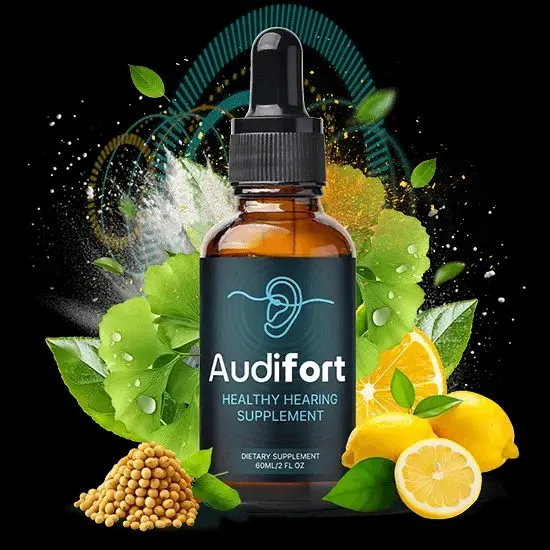
Let me be upfront about something. I've reviewed hundreds of hearing supplements over the past decade, and most of them don't survive a close look at the ingredient dosages. So when Audifort started appearing in my research feed as a hearing supplement 2026 contender, I did what I always do — I pulled the formula apart, checked the clinical literature, and looked for the gaps the marketing copy glosses over. What I found is more nuanced than either the enthusiastic affiliate reviews or the reflexive skeptics would have you believe. Here's the full picture.
Key Takeaways
- Audifort contains seven ingredients with documented roles in auditory and neurological health — Ginkgo Biloba, Magnesium, Zinc, Vitamin B12, Alpha Lipoic Acid, Acetyl-L-Carnitine, and CoQ10.
- Several of these ingredients have peer-reviewed research supporting their relevance to hearing health, though evidence quality varies by ingredient.
- No verified customer reviews were found as of 2026 — this is a transparency gap worth noting before you buy.
- The formula targets blood circulation to the inner ear, antioxidant protection, and nerve health — three mechanisms with legitimate scientific backing.
- As with any supplement, individual results will vary, and this product isn't a substitute for medical evaluation of hearing loss.
What Is Audifort, and What Does the Company Claim?
Audifort is a dietary supplement formulated to support auditory health, marketed as a natural approach to maintaining hearing clarity and inner ear function. According to the product's official positioning, it targets three primary mechanisms: blood flow to the inner ear, antioxidant defense against oxidative stress, and nerve signal integrity.
The formula contains seven active ingredients, each with a documented biological role in ear or neurological health.
The Claim: Audifort's marketing suggests the formula can support healthy hearing, reduce occasional ear discomfort, and promote mental sharpness alongside auditory performance.
What that actually means: These are structure/function claims, not disease treatment claims. Under current regulatory frameworks, no supplement can legally claim to treat, cure, or reverse hearing loss. So when you read "supports healthy hearing," you're reading the legally permissible version of a broader aspiration. That's not a red flag by itself — it's the standard language every supplement must use. The real question is whether the ingredients behind those claims have credible science behind them.
The bottom line: Audifort is a multi-ingredient auditory support formula. The claims are legally appropriate. Whether the formula delivers depends entirely on what's inside — and at what dosages.
What Are the Key Ingredients in Audifort?
Audifort's formula includes seven ingredients that have each been studied in the context of hearing, nerve health, or antioxidant protection. The weight of current evidence leans toward several of these being genuinely relevant to auditory function, though the evidence base for some is stronger than others. Here's what the research actually says about each one.
Ginkgo Biloba Extract — The Most-Studied Ingredient for Hearing
What is Ginkgo Biloba? Ginkgo Biloba is a plant extract derived from the leaves of the Ginkgo tree, standardized for flavonoid glycosides and terpene lactones. It's one of the most extensively studied botanical compounds in the context of circulation and neurological function, with a research history spanning several decades.
Published research demonstrates that Ginkgo Biloba may support blood flow to the cochlea — the fluid-filled structure in the inner ear responsible for converting sound vibrations into nerve signals. A peer-reviewed paper in the International Tinnitus Journal examined Ginkgo's effects on inner ear circulation, finding some evidence of benefit, though the authors noted that study designs varied and results were not uniform across all participants. The evidence is real but not definitive.
Red flag to watch for: Ginkgo's clinical effects are highly dose-dependent. Studies that showed positive outcomes typically used standardized extracts in specific dose ranges. If Audifort's Ginkgo dose falls below what was used in those trials, the benefit may be attenuated. The company doesn't publish a full supplement facts panel with exact milligram amounts on its primary marketing pages — that's a transparency issue I'd want resolved before making a purchase decision.
Magnesium — Inner Ear Protection Under Noise Stress
What is Magnesium's role in hearing? Magnesium is an necessary mineral involved in hundreds of enzymatic reactions. In the context of auditory health, research suggests it may help protect the inner ear from noise-induced damage by supporting blood vessel function and reducing oxidative stress in cochlear tissue.
According to the National Institutes of Health (NIH), magnesium deficiency is associated with increased susceptibility to noise-induced hearing changes. Some evidence indicates that adequate magnesium intake may support the integrity of the blood supply to the cochlea. This is one of the stronger mechanistic arguments in Audifort's formula.
Zinc — Antioxidant Defense and Immune health in the Ear
Zinc is a trace mineral with well-documented antioxidant properties. Based on NIH guidelines, zinc plays a role in maintaining the function of the stria vascularis — a structure in the cochlea that helps maintain the ionic environment necessary for hearing.
Some researchers have explored zinc's relationship to age-related hearing changes, though the evidence base is still developing and results across studies have been mixed.
Vitamin B12 — Nerve Signal Integrity
What is Vitamin B12's connection to hearing? Vitamin B12 is a water-soluble vitamin required for the maintenance of myelin sheaths — the protective coating around nerve fibers, including the auditory nerve. Deficiency in B12 has been associated in some studies with auditory nerve dysfunction.
A peer-reviewed paper in the American Journal of Clinical Nutrition has examined B12 status and neurological function broadly. While some researchers have found associations between B12 deficiency and hearing-related nerve issues, the evidence that supplementation reverses established hearing loss is limited. What's more defensible is that maintaining adequate B12 levels supports the nerve infrastructure that hearing depends on.
Alpha Lipoic Acid — Antioxidant Protection for Cochlear Cells
Alpha Lipoic Acid (ALA) is a compound that functions as an antioxidant in both water-soluble and fat-soluble environments, giving it broad cellular reach. Some evidence indicates ALA may help protect cochlear hair cells — the sensory cells that detect sound — from oxidative damage.
Hair cell loss is a primary driver of age-related hearing decline, so this mechanism is directly relevant. The evidence is promising but not yet conclusive from large-scale human trials.
Acetyl-L-Carnitine — Mitochondrial Support for Auditory Neurons
Acetyl-L-Carnitine (ALCAR) is an amino acid derivative that supports mitochondrial energy production in neurons. Early research indicates it may support the metabolic health of auditory neurons, which are energy-intensive cells. While some researchers have found positive signals in animal models and small human studies, the evidence base is still developing for direct hearing applications.
Coenzyme Q10 — Cellular Energy and Antioxidant Function
CoQ10 is a compound found naturally in the body that supports mitochondrial energy production and acts as an antioxidant. According to some researchers, CoQ10 levels decline with age, and this decline may affect energy-dependent tissues like the cochlea. While some evidence supports CoQ10's role in cellular protection, large-scale clinical trials more precisely targeting hearing outcomes are limited.
The bottom line: Audifort's ingredient list is scientifically coherent. Each component has a plausible mechanism connecting it to auditory or neurological health. The honest caveat is that "plausible mechanism" and "proven clinical outcome" are not the same thing — and the dosage transparency gap is a real concern.
Ingredient Comparison: Audifort vs. Common Hearing Supplement Formulas
| Ingredient | Audifort | Typical Competitor A | Typical Competitor B | Evidence Strength for Hearing |
|---|---|---|---|---|
| Ginkgo Biloba | ✓ Included | ✓ Often included | ✗ Often absent | Moderate — circulation focus |
| Magnesium | ✓ Included | ✗ Often absent | ✓ Sometimes included | Moderate — noise protection |
| Zinc | ✓ Included | ✓ Often included | ✓ Often included | Moderate — antioxidant/cochlear |
| Vitamin B12 | ✓ Included | ✗ Often absent | ✗ Often absent | Moderate — nerve health |
| Alpha Lipoic Acid | ✓ Included | ✗ Rarely included | ✗ Rarely included | Early — cochlear antioxidant |
| Acetyl-L-Carnitine | ✓ Included | ✗ Rarely included | ✗ Rarely included | Early — neuron energy |
| CoQ10 | ✓ Included | ✗ Sometimes absent | ✗ Often absent | Early — cellular energy/antioxidant |
| Third-Party Testing Disclosed | Not confirmed publicly | Varies | Varies | — |
What this table tells you: Audifort's formula is broader than most competing hearing health supplements. Including ALA, ALCAR, and CoQ10 alongside the more common Ginkgo-Zinc-Magnesium base is a meaningful differentiator. Whether those additions are at clinically relevant doses is the question that remains unanswered without a full supplement facts disclosure.
Does Audifort Actually Deliver on Its Claims?
This is the question that matters. Audifort positions itself as a best hearing supplement 2026 option by combining ingredients that target circulation, antioxidant defense, and nerve health simultaneously.
The multi-pathway approach is scientifically logical — hearing loss and auditory decline are rarely caused by a single factor. The honest assessment is that the formula's architecture is sound, but the clinical evidence for the specific combination as a whole hasn't been tested in a dedicated trial.
The Evidence:
- Ginkgo Biloba has been studied in the context of inner ear circulation in multiple peer-reviewed trials, with some positive findings for blood flow support — though results are not uniform across all study populations.
- Magnesium's role in protecting against noise-induced cochlear stress has been examined in published research, with the NIH acknowledging its relevance to inner ear health.
- Vitamin B12 deficiency has been associated with auditory nerve dysfunction in observational studies, supporting the rationale for its inclusion in an auditory support supplement.
- Alpha Lipoic Acid's antioxidant properties in cochlear tissue have been explored in early-stage research, with some researchers finding protective effects on hair cells in animal models.
- Zinc's role in cochlear function is supported by its documented presence in the stria vascularis and its antioxidant activity, per NIH mineral research.
The Verdict: Each ingredient has a defensible scientific rationale. What's missing is a clinical trial testing this specific combination at these specific doses in human subjects with documented hearing concerns. That's not unusual — very few supplement combinations have been tested as complete formulas. But it does mean you're making an inference from component-level evidence, not formula-level proof.
In short: The science behind the individual ingredients is real. The leap from "these ingredients have relevant mechanisms" to "this formula will produce measurable hearing improvement for you" requires more evidence than currently exists in the public domain.
What Are the Red Flags You Should Know About?
I don't write reviews that only tell you what a company wants you to hear. Here are the legitimate concerns I identified during this investigation of Audifort as a hearing health supplement.
Transparency Gap: No Public Supplement Facts Panel
The most real concern is the absence of a publicly disclosed, complete supplement facts panel with exact milligram amounts for each ingredient. Dosage matters enormously in supplement science.
Ginkgo Biloba studies that showed positive outcomes used specific standardized doses — if the amount in Audifort falls below those thresholds, the clinical relevance of including it diminishes substantially. You should be able to see exactly what you're taking before you buy it.
No Verified Customer Reviews Found
As of 2026, no independently verified customer reviews from third-party platforms were found during this investigation. That doesn't mean the product doesn't work — it may simply be newer to market or have limited distribution.
But it does mean you're making a purchase decision without the benefit of real-world user data. I'd want to see verified purchase reviews before drawing conclusions about real-world effectiveness.
Third-Party Testing Status Unconfirmed
GMP (Good Manufacturing Practice) certification and third-party lab testing are the baseline standards for supplement quality assurance. Whether Audifort is manufactured in an FDA-registered, GMP-certified facility and whether independent Certificate of Analysis (COA) documents are available hasn't been publicly confirmed in the materials reviewed. This is information you should request directly from the company before purchasing.
The bottom line: These aren't reasons to dismiss Audifort outright. They're questions that deserve direct answers from the manufacturer. A company confident in its product should be able to provide full dosage disclosure, manufacturing certifications, and third-party test results on request.
How Does Audifort Work as an Auditory Support Supplement?
Audifort's formula targets three distinct biological pathways that research associates with auditory function. Understanding these mechanisms helps you evaluate whether the approach is scientifically grounded — or just marketing language dressed up in scientific-sounding terms.
Pathway 1: Cochlear Blood Flow
The inner ear is highly dependent on adequate blood supply. The cochlea — the spiral-shaped organ that translates sound waves into electrical signals — requires consistent oxygen and nutrient delivery.
Ginkgo Biloba and Magnesium both have documented roles in supporting vascular function, and some researchers have in particular examined their effects on cochlear circulation. Reduced blood flow to the inner ear is associated with certain types of hearing difficulty, making this a mechanistically relevant target.
Pathway 2: Oxidative Stress Reduction
Cochlear hair cells — the sensory cells that detect sound — are especially vulnerable to oxidative damage. These cells don't regenerate in humans once lost, which makes protecting them from oxidative stress a meaningful preventive strategy.
Alpha Lipoic Acid, CoQ10, and Zinc all function as antioxidants with documented activity in cellular protection. According to some researchers, oxidative stress in the cochlea is a contributing factor in age-related hearing decline.
Pathway 3: Auditory Nerve Health
Sound detection is only half the equation. The auditory nerve must transmit signals from the cochlea to the brain accurately. Vitamin B12 and Acetyl-L-Carnitine both have documented roles in neurological function — B12 in myelin maintenance and ALCAR in mitochondrial support for neurons. Maintaining the health of the auditory nerve pathway is a legitimate target for a hearing health supplement.
Pricing, Packaging, and What You Actually Get
Audifort is sold as a capsule-based supplement. Based on available product information, it's formulated for daily oral use. The capsules are described as easy to swallow, with no reported strong aftertaste — a practical consideration for a supplement intended for long-term daily use.
Pricing structures for supplements like Audifort typically follow a tiered model — single bottle, three-bottle, and six-bottle options — with per-unit cost decreasing at higher quantities. As of 2026, you should verify current pricing directly through the official product page, as promotional pricing can change. Look namely for:
- Whether a money-back guarantee is offered (and the exact terms — 30-day vs. 60-day matters)
- Whether free shipping is included at any tier
- Whether the company sells through third-party retailers or exclusively direct-to-consumer
- Whether auto-ship enrollment is required or optional
These aren't minor details. Supplement companies that make it difficult to cancel subscriptions or claim refunds are a documented consumer protection concern. Get the terms in writing before you commit to a multi-bottle purchase.
Is Audifort Worth Considering as a Hearing Supplement in 2026?
Here's my honest assessment after examining the formula, the ingredient science, and the transparency gaps. Audifort's ingredient selection is more thoughtful than the average hearing supplement.
The seven-ingredient formula covers multiple relevant biological pathways, and several of the components have genuine peer-reviewed support for their roles in auditory or neurological health. That puts it ahead of single-ingredient or poorly formulated competitors.
What holds it back from a stronger recommendation is the transparency deficit. Without confirmed dosages, third-party testing documentation, and verified user outcomes, you're making a faith-based purchase decision rather than an evidence-based one. That's a meaningful distinction for a product in this category.
If you're considering Audifort as part of a broader approach to maintaining your hearing health — alongside regular audiological check-ups, hearing protection in loud environments, and a diet that supports cardiovascular health — the formula is scientifically coherent enough to be worth investigating further. It isn't a replacement for medical evaluation if you're experiencing clear hearing changes.
Who this is not for: Anyone expecting a supplement to reverse established, clinically diagnosed hearing loss. The evidence doesn't support that outcome for any currently available supplement, including Audifort. If that's your expectation, you need a conversation with an audiologist, not a supplement bottle.
How To Order Audifort — 3 Steps
- Visit the official product page — Use the link below to access current pricing and package options. Avoid third-party resellers where authenticity can't be confirmed.
- Select your package — Review the single-bottle and multi-bottle options. Check whether a money-back guarantee applies to your chosen quantity before completing your order.
- Complete your purchase and confirm your guarantee terms — Save your order confirmation email. If a refund policy applies, note the exact window and the return process before your guarantee period expires.
Frequently Asked Questions
Ready to Try Audifort?
All purchases come with free shipping and a full 90-day refund policy.
See Current Offer ➔