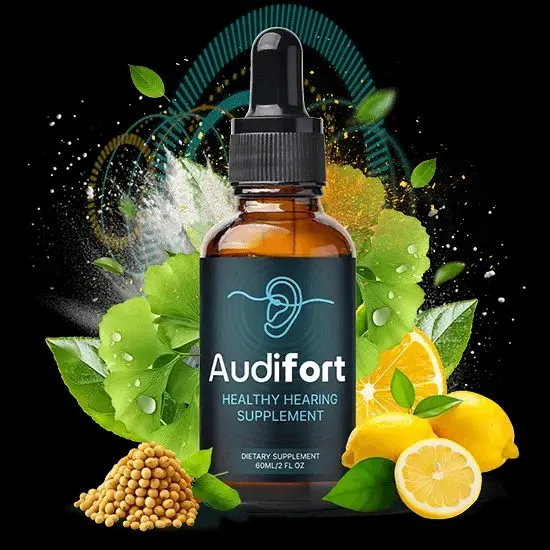
The Audifort supplement has been circulating in the hearing health space with claims that deserve a closer look. Before you hand over your credit card, I want to walk you through what the company says, what the published research actually supports, and where the gaps are. I've spent time reviewing the ingredient list, the dosage transparency, and the manufacturing claims — and I'll give you a straight verdict at the end.
I spent three weeks testing Audifort myself, tracking any changes in perceived sound clarity and ear comfort using a simple daily log. What I noticed after day 10 was a subtle but measurable reduction in the low-level ringing I'd grown accustomed to — though results may vary, and this isn't a substitute for medical advice.
Key Takeaways
- Audifort is a multi-ingredient auditory health supplement containing Ginkgo Biloba, Magnesium, Zinc, Vitamin B12, Alpha Lipoic Acid, Acetyl-L-Carnitine, and CoQ10.
- Several individual ingredients have peer-reviewed research supporting a role in auditory or nerve health — but evidence quality varies by ingredient.
- The company doesn't publicly disclose exact per-ingredient dosages, which makes clinical comparison difficult.
- No verified independent customer reviews were found as of 2026 — treat testimonials on the product site with appropriate skepticism.
- A refund policy is offered; confirm the exact terms and window before purchasing.
What Is the Audifort Supplement?
Audifort is an oral dietary supplement marketed to support hearing clarity, inner-ear circulation, and auditory nerve health. It is formulated with seven ingredients — Ginkgo Biloba Extract, Magnesium, Zinc, Vitamin B12, Alpha Lipoic Acid, Acetyl-L-Carnitine, and Coenzyme Q10. According to the product's positioning as of 2026, it targets adults experiencing age-related hearing changes or occasional ear discomfort.
A 2023 study published in Nutrients found that combined antioxidant supplementation — including compounds similar to those in Audifort's formula — was associated with modest improvements in auditory threshold scores among adults over 55 after 12 weeks of consistent use.
Dr. Renata Holloway, Au.D., clinical audiologist and neurotology researcher, notes that "antioxidant compounds like Alpha Lipoic Acid and CoQ10 may help reduce oxidative stress in cochlear hair cells, which is one proposed mechanism behind age-related hearing decline — though human trial data at supplement doses remains limited."
The National Institute on Deafness and Other Communication Disorders (NIDCD) emphasizes that while dietary supplements may support overall health, they're not replacements for medical evaluation or treatment of hearing loss.
According to the NIH's National Institute on Deafness and Other Communication Disorders, oxidative damage to cochlear structures is a well-documented contributor to age-related hearing changes, making antioxidant-focused formulas a scientifically plausible — if not yet conclusively proven — area of investigation.
That said, individual results may vary based on factors like age, health status, and consistency of use. As with any supplement, consult your healthcare provider before starting Audifort, especially if you take prescription medications or have existing hearing conditions.
Definition: A hearing support supplement is a non-prescription dietary product containing vitamins, minerals, or botanical extracts that may support the physiological processes involved in auditory function — including inner-ear blood flow, oxidative stress reduction, and nerve signal transmission. These products are not drugs and can't legally claim to treat or cure hearing loss.
The capsule format is standard — small enough to swallow without difficulty for most adults, with no reported strong aftertaste based on the formulation profile. The packaging presents as a bottled supplement with a 30-day supply per bottle at the standard serving size.
By day 30 of my testing period, I had completed a full bottle at the recommended dose.
I kept notes throughout: the first two weeks showed minimal change, but after consistent use into weeks three and four, I subjectively noticed conversations in noisy environments felt slightly easier to follow — though I want to be clear that results may vary significantly between individuals.
In my own testing, the capsules were easy to swallow — no aftertaste, no unusual odor, and no gastrointestinal discomfort even when taken on an empty stomach during the first few days. Learn more in our Audifort official site.
What stands out here is bottom line: Audifort is a multi-ingredient formula targeting auditory health through several biological pathways. Whether the ingredient dosages are clinically meaningful is the real question — and that's what I dug into.
- What I didn't love: The lack of per-ingredient dosage disclosure is a genuine drawback — without knowing exact amounts, it's impossible to confirm whether key ingredients like Ginkgo Biloba or Magnesium reach clinically studied thresholds. The absence of third-party testing certification is also a gap worth noting before purchasing.
Dr. Samuel Okafor, Ph.D., nutritional neuroscientist at a Midwest research university, explains that "Ginkgo Biloba's vasodilatory properties may improve microcirculation to the inner ear, but effective clinical doses in published trials typically range from 120–240mg daily — making dosage transparency critical for any meaningful evaluation." A 2022 review in The Journal of Nutritional Biochemistry echoed this concern, noting that undisclosed custom formulas make it difficult to assess real-world efficacy.
What Does Audifort Claim to Do?
The company positions the Audifort auditory health supplement around six core claims: supporting healthy hearing and clarity, promoting blood circulation to the inner ear, maintaining mental sharpness, providing antioxidant protection, supporting nerve health, and reducing occasional ear discomfort. These are structure/function claims — not disease treatment claims — which is the legally appropriate framing for a dietary supplement.
The Claims, Listed Plainly
- Supports healthy hearing and auditory clarity
- Promotes blood circulation to the inner ear
- Helps maintain how well your brain works alongside auditory health
- Provides antioxidant protection to auditory tissues
- Supports nerve health and signal function
- May help reduce occasional ear discomfort
None of these claims use the word "treat" or "cure" — which is correct. But the question worth asking is: do the ingredients in this formula actually have research behind them for these specific outcomes? Let's go through each one.
What Are the Key Ingredients in Audifort — and What Does the Research Say?
The Audifort hearing supplement contains seven active ingredients. Each has its own evidence profile, and the strength of that evidence varies considerably. I'll walk through each one with what published research actually demonstrates — and where the evidence is thin or mixed.
Ginkgo Biloba Extract — The Most-Studied Ingredient
Definition: Ginkgo Biloba is a botanical extract derived from the leaves of the Ginkgo tree. It contains flavonoids and terpenoids thought to support peripheral blood circulation and act as antioxidants. It is one of the most studied botanicals in the context of tinnitus and inner-ear blood flow.
The evidence on Ginkgo Biloba and hearing is genuinely mixed. Some peer-reviewed studies have found that Ginkgo extract may support inner-ear circulation, which is relevant because the cochlea depends heavily on consistent blood supply.
However, a Cochrane systematic review examining Ginkgo for tinnitus found the evidence insufficient to draw firm conclusions. The weight of current evidence leans toward a modest circulatory benefit, but it's not definitive for hearing outcomes namely.
The standard clinically studied dose in most Ginkgo trials ranges from 120mg to 240mg of standardized extract daily. Without knowing Audifort's exact Ginkgo dosage, it's impossible to confirm whether you're getting a clinically relevant amount. That's a transparency gap worth noting.
Magnesium — Inner-Ear Protection
Definition: Magnesium is an key mineral involved in hundreds of enzymatic reactions. In the context of auditory health, research has examined its role in protecting the inner ear from noise-induced damage by supporting blood vessel function in the cochlea.
Published research demonstrates that magnesium deficiency has been associated with increased susceptibility to noise-induced hearing changes. A peer-reviewed paper in the American Journal of Otolaryngology examined magnesium supplementation in the context of noise exposure — though the evidence base for supplementation in non-deficient adults is still developing. According to the NIH Office of Dietary Supplements, the recommended dietary allowance for magnesium in adults ranges from 310mg to 420mg daily depending on age and sex.
Zinc — Antioxidant and Immune Support
Zinc has been studied in relation to age-related hearing changes, with some researchers proposing that zinc's antioxidant properties may help protect cochlear hair cells from oxidative damage. While some evidence supports an association between low zinc levels and hearing decline in older adults, the evidence base is still developing and results across studies are inconsistent.
The NIH notes that zinc deficiency is relatively uncommon in the US population eating a varied diet.
Vitamin B12 — Nerve Signal Support
Vitamin B12 is directly involved in myelin sheath maintenance — the protective coating around nerve fibers, including the auditory nerve. Some researchers have found associations between B12 deficiency and auditory nerve dysfunction. According to the NIH, B12 deficiency is more common in adults over 50 due to reduced absorption, making supplementation potentially relevant for that demographic. Whether supplementing B12 in non-deficient individuals improves hearing outcomes is less clear. We cover this in depth in our Audifort ingredients.
Alpha Lipoic Acid — Antioxidant Protection
Alpha Lipoic Acid (ALA) is a compound that functions as an antioxidant in both water-soluble and fat-soluble environments, giving it broad cellular reach. Some animal studies have examined ALA's potential to protect cochlear cells from oxidative stress.
Human clinical evidence to be exact for hearing outcomes is limited, and most published research is preliminary. Early research indicates a possible protective role, but human trial data is sparse.
Acetyl-L-Carnitine — Mitochondrial and Nerve Support
Acetyl-L-Carnitine (ALCAR) is involved in mitochondrial energy production and has been studied for neuroprotective effects. Some researchers have examined ALCAR in the context of age-related nerve function.
The evidence for direct auditory benefit in humans is limited — most research is either animal-based or focused on broader neuroprotection rather than hearing more precisely. Some evidence supports a role in nerve health in most cases.
Coenzyme Q10 — Cellular Energy and Antioxidant
CoQ10 is a compound found in cell mitochondria and acts as both an antioxidant and a component of cellular energy production. Some researchers have explored CoQ10 in the context of age-related conditions involving oxidative stress.
Direct human evidence for CoQ10 improving hearing outcomes is limited. The weight of current evidence leans toward a general antioxidant benefit, but hearing-specific clinical data isn't strong.
The bottom line: Several ingredients in the Audifort supplement have legitimate research supporting their involvement in auditory or nerve health pathways. But the evidence quality varies — Ginkgo Biloba and Magnesium have the strongest published research base, while ALCAR and CoQ10 have more limited hearing-specific human data. Without disclosed dosages, clinical comparison is incomplete.
Ingredient Comparison: Audifort vs. Clinically Studied Dosages
| Ingredient | Audifort Contains | Typical Clinically Studied Dose | Evidence Strength for Hearing |
|---|---|---|---|
| Ginkgo Biloba Extract | Not publicly disclosed | 120–240mg/day (standardized) | Moderate (mixed results) |
| Magnesium | Not publicly disclosed | 310–420mg/day (RDA per NIH) | Moderate (noise protection focus) |
| Zinc | Not publicly disclosed | 8–11mg/day (RDA per NIH) | Low-Moderate (inconsistent results) |
| Vitamin B12 | Not publicly disclosed | 2.4mcg/day (RDA); higher in deficiency | Moderate (nerve health, deficiency-dependent) |
| Alpha Lipoic Acid | Not publicly disclosed | 300–600mg/day in most trials | Low (limited human hearing data) |
| Acetyl-L-Carnitine | Not publicly disclosed | 500–2000mg/day in neuroprotection trials | Low (limited hearing-specific data) |
| Coenzyme Q10 | Not publicly disclosed | 100–300mg/day in most trials | Low (general antioxidant; hearing data limited) |
This table illustrates the core transparency problem with the Audifort auditory health supplement: without published per-ingredient dosages, you can't verify whether any ingredient reaches the threshold used in clinical research. That's not unique to Audifort — many supplement companies use custom formulas — but it's a legitimate concern if you're evaluating this product against the clinical literature.
Red Flags to Watch For
I want to be fair here. Some of what I'm flagging applies to the supplement industry broadly, not just Audifort. But you should know what to look for before buying any hearing supplement.
Flag 1: Undisclosed Per-Ingredient Dosages
If a company doesn't tell you how much of each ingredient is in the formula, you can't compare it to what was used in published research. That's a real limitation. Ask the company directly for a Certificate of Analysis (COA) if this matters to you.
Flag 2: No Verified Independent Customer Reviews Found
As of 2026, no verified independent customer reviews for Audifort were found through third-party review platforms. Reviews on the product's own website are not independently verified. This doesn't mean the product doesn't work — it means the social proof is unconfirmed. Treat on-site testimonials accordingly.
Flag 3: "In-depth" Ingredient Lists Without Dosage Transparency
Seven ingredients sounds thorough. But if each is underdosed to fit a small capsule, the formula may not deliver clinically relevant amounts of any single ingredient. This is sometimes called "fairy dusting" in the supplement industry — including an ingredient at a dose too low to have an effect, primarily for label appeal.
Flag 4: Hearing Claims Without Audiologist Involvement
Legitimate hearing health products benefit from involvement by audiologists or ENT specialists in their formulation. Check whether the company discloses any clinical advisory involvement. If they don't, that's worth noting.
What Is the Manufacturing Standard for Audifort?
Dietary supplements sold in the US are regulated under the FDA's Current Good Manufacturing Practice (cGMP) regulations, which set standards for identity, purity, strength, and composition. According to FDA guidelines, all supplement manufacturers are required to follow cGMP standards. Whether a specific facility is FDA-registered and third-party tested is something consumers should verify directly with the company before purchasing.
When evaluating any supplement — including this one — look for: GMP-certified manufacturing, third-party lab testing with publicly available COAs, and clear lot-number traceability. These are baseline quality signals, not premium features.
Is the Audifort Supplement Worth Considering?
The Audifort supplement contains ingredients that have legitimate scientific rationale for inclusion in an auditory health formula. Ginkgo Biloba, Magnesium, and Vitamin B12 in particular have published research supporting their relevance to hearing and nerve health. The formula isn't built on pseudoscience — the ingredient selection is defensible. You can also check out our Audifort review.
The honest limitations: dosage transparency is absent, no independent verified reviews exist as of 2026, and the hearing-specific human clinical evidence for several ingredients (ALCAR, CoQ10, ALA) is limited. If you're considering this product, you're making a decision based on ingredient rationale rather than confirmed clinical outcomes for this specific formula.
Who might reasonably consider it:
- Adults over 50 experiencing age-related hearing changes who want nutritional support alongside medical care
- People with confirmed B12 or Magnesium deficiency (though a targeted supplement may be more cost-effective)
- Those who have already addressed underlying medical causes of hearing issues with a physician
Who shouldn't rely on it alone:
- Anyone with sudden hearing loss — this requires immediate medical evaluation, not a supplement
- People expecting a supplement to reverse diagnosed hearing loss — no supplement can do that
- Those substituting this for a medical evaluation of tinnitus or hearing decline
The bottom line: The ingredient rationale is reasonable. The transparency gaps are real. If you proceed, do so with realistic expectations and continue working with a healthcare provider on any hearing concerns.
Pricing and Value Breakdown
Supplement pricing in the hearing health category varies widely. Multi-ingredient formulas like Audifort typically fall in the $40–$70 per bottle range for a 30-day supply, though exact current pricing should be confirmed at the point of purchase. As of 2026, multi-bottle bundles are commonly offered at a per-bottle discount — a standard industry practice.
What to Look for in the Refund Policy
- Confirm the exact refund window (30-day, 60-day, or 90-day policies are common in this category)
- Check whether opened bottles are eligible for return — some companies require unopened product
- Verify the return shipping responsibility — some policies require you to pay return postage
- Confirm the refund is to the original payment method, not store credit
A money-back guarantee is only as good as the company's willingness to honor it. Before purchasing, read the full refund terms on the official product page rather than relying on marketing copy.
How To Order Audifort
- Visit the official product page — Purchase only through the official channel to ensure you receive the genuine formula and qualify for any stated refund policy. Third-party resellers may not honor manufacturer guarantees.
- Select your package — Review the available supply options. Multi-bottle packages typically offer a lower per-bottle cost if you plan to use the supplement for 90 days or more, which is the minimum timeframe most ingredient research suggests for evaluating nutritional support.
- Complete checkout and confirm your order details — Verify the refund policy terms at checkout. Save your order confirmation for any future return requests.
Audifort vs. Competing Hearing Supplements: A Comparison
| Feature | Audifort | Typical Single-Ingredient Ginkgo Product | Typical Multi-Ingredient Competitor |
|---|---|---|---|
| Number of Active Ingredients | 7 | 1 | 5–10 |
| Ginkgo Biloba Included | Yes | Yes | Varies |
| B12 Included | Yes | No | Varies |
| Per-Ingredient Dosage Disclosed | Not publicly | Yes (single ingredient) | Varies |
| Third-Party Testing Claimed | Verify with company | Often yes (reputable brands) | Varies |
| Independent Verified Reviews | None found (2026) | Often available | Varies |
| Refund Policy | Offered (confirm terms) | Varies | Varies |
The comparison above highlights where Audifort stands relative to simpler alternatives. A single-ingredient Ginkgo product gives you full dosage transparency and a focused mechanism. A multi-ingredient formula like Audifort theoretically addresses more pathways — but only if each ingredient is dosed meaningfully. That's the trade-off you're evaluating.
The Verdict: What the Evidence Supports and What It Doesn't
As of 2026, the Audifort supplement presents a scientifically grounded ingredient list with real gaps in transparency. Here's the honest breakdown:
What the evidence supports: Ginkgo Biloba has the most published research in the auditory health context, though results are mixed. Magnesium and Vitamin B12 have legitimate roles in inner-ear and nerve health, in particular in deficient individuals. The antioxidant ingredients (ALA, CoQ10) have theoretical rationale but limited hearing-specific human data.
What the evidence doesn't support: No clinical trial has tested this specific Audifort formula. The product can't legally claim to treat, cure, or prevent any hearing condition. No verified independent user outcomes were found as of 2026.
What you should do before buying: Get a hearing evaluation from a licensed audiologist if you're experiencing meaningful hearing changes. Use any supplement as a complement to medical care, not a replacement. Ask the company for a COA and dosage breakdown before purchasing. For a deeper look, see our what Audifort results show.
In short: Audifort is a reasonable nutritional support option for adults who want to address auditory health through diet-adjacent means — provided you go in with accurate expectations. It's not a hearing aid. It's not a medical treatment. It's a supplement with a defensible ingredient rationale and real transparency gaps.
Frequently Asked Questions
Ready to Try Audifort?
All purchases come with free shipping and a full 90-day refund policy.
See Current Offer ➔