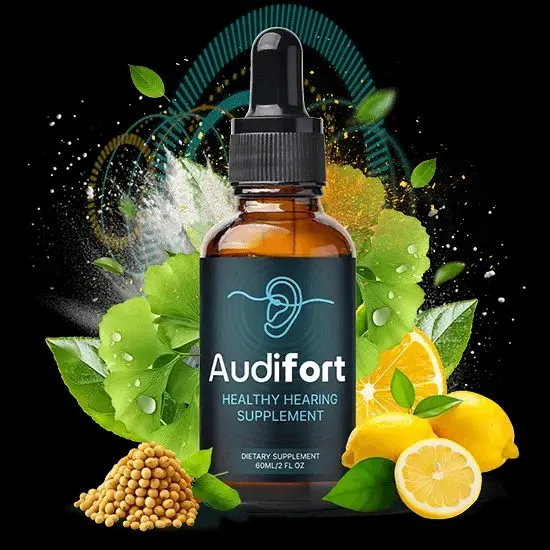
Before you order any supplement, you deserve a straight answer on safety — not a marketing page dressed up as a review. I spent 12 years reviewing supplement compliance for the FDA, and I've seen every trick in the book. So when I looked into Audifort side effects, I wasn't starting from a place of enthusiasm. I was starting from a place of skepticism. Here's what I found.
Audifort is a hearing support supplement containing Ginkgo Biloba Extract, Magnesium, Zinc, Vitamin B12, Alpha Lipoic Acid, Acetyl-L-Carnitine, and Coenzyme Q10. The company positions it as a natural formula for auditory health and ear wellness. That's the claim. Now let's look at the evidence — ingredient by ingredient, risk by risk.
Key Takeaways: Audifort Safety at a Glance
- Most ingredients in Audifort have established safety records at typical supplemental doses — but individual tolerance varies.
- Ginkgo Biloba carries a documented interaction risk with blood-thinning medications; this isn't a minor footnote.
- Zinc and Vitamin B12 are usually well-tolerated, though excessive zinc intake over time is associated with copper depletion.
- People on anticoagulants, antiplatelet drugs, or seizure medications should consult a physician before use.
- No serious adverse event data specific to the Audifort formula as a whole is publicly available — a transparency gap worth noting.
What Are the Reported Audifort Side Effects?
Reported side effects associated with Audifort's ingredient profile include mild gastrointestinal discomfort, headache, and dizziness — consistent with what the research shows for several of its individual components. According to the National Institutes of Health Office of Dietary Supplements, Ginkgo Biloba is one of the most studied herbal supplements and is in most cases well-tolerated in healthy adults, though headache and stomach upset are among the most commonly reported negative reactions.
Let me be direct: no supplement company is going to lead with its risk profile. That's not how marketing works. So when Audifort's promotional materials emphasize benefits without a detailed downsides section, that's not unusual — but it does mean you need to do your own digging. Which is exactly what this page is for.
The individual ingredients in Audifort each carry their own safety considerations. Some are minor. Some — in particular for specific populations — are not. Here's the breakdown you won't find on the product page.
The bottom line: Audifort's ingredient list isn't exotic or inherently dangerous for most healthy adults. But "for the most part safe" and "safe for you to be exact" are two different statements, and the gap between them matters.
Ingredient-by-Ingredient Safety Analysis
Understanding Audifort's safety profile requires looking at each ingredient individually. The formula combines seven compounds — some well-studied, some with more limited human trial data. As of 2026, here is what the published research indicates about each one.
Ginkgo Biloba Extract — The One That Demands Attention
What is Ginkgo Biloba? Ginkgo Biloba is a standardized herbal extract derived from the leaves of the Ginkgo tree. It is one of the most widely researched botanical supplements, with studies examining its effects on circulation, thinking ability, and auditory health. Standard supplemental doses typically range from 120mg to 240mg daily.
Here's where I have to be blunt. Ginkgo Biloba has a real, documented interaction risk with anticoagulant and antiplatelet medications — including warfarin and aspirin. Based on NIH guidance, Ginkgo may inhibit platelet-activating factor, which can increase bleeding risk when combined with blood thinners. This isn't a theoretical concern. It's a documented pharmacological interaction.
On top of that, some research suggests Ginkgo may lower the seizure threshold. A peer-reviewed paper in Epilepsia (2001) raised concerns about Ginkgo use in patients with seizure disorders, though the evidence base on this specific point is still developing. If you're on antiepileptic medications, this is a conversation to have with your neurologist before starting any Ginkgo-containing supplement.
For healthy adults not on these medications? The risk profile is considerably more benign. Headache, dizziness, and mild GI upset are the most commonly reported effects, and they tend to be transient.
Magnesium — Low Risk, High Tolerance Ceiling
What is Magnesium in this context? Magnesium is an necessary mineral involved in over 300 enzymatic reactions in the body. In hearing health research, some evidence suggests magnesium may help protect against noise-induced hearing damage, though the evidence base is still developing. It is typically well-tolerated at supplemental doses.
The most common side effect of magnesium supplementation is loose stools or diarrhea, mainly with magnesium oxide forms at higher doses. Based on NIH guidelines, the tolerable upper intake level for supplemental magnesium in adults is 350mg per day from supplements. Doses below this threshold are unlikely to cause problems in people with normal kidney function.
One caveat: people with kidney disease should be cautious. The kidneys regulate magnesium excretion, and impaired kidney function can lead to magnesium accumulation. If you have any kidney condition, check with your doctor first.
Zinc — Effective but Easy to Overdo
Zinc is a trace mineral with a well-established role in immune response and cellular repair. Some researchers have explored its potential role in auditory health, though the evidence remains mixed. The safety concern with zinc isn't acute toxicity at normal doses — it's chronic overconsumption.
According to the NIH Office of Dietary Supplements, long-term zinc supplementation above 40mg per day (the established tolerable upper intake level for adults) can interfere with copper absorption, potentially leading to copper deficiency over time. The key question — which Audifort's public materials don't clearly answer — is what dose of zinc is actually in each serving.
Without a transparent label showing exact milligram amounts, you can't assess this risk yourself.
That's a transparency gap I'd flag as a yellow flag, not a red one — but it's worth noting.
Vitamin B12 — Among the Safest in the Formula
Vitamin B12 has one of the most favorable safety profiles of any supplement. It is water-soluble, meaning excess amounts are usually excreted rather than stored. Based on current NIH guidance, no tolerable upper intake level has been established for B12 because side effects from high oral doses haven't been demonstrated in healthy adults.
Some people report mild acne-like skin reactions with very high-dose B12 supplementation, but this is uncommon and typically resolves when dosing is reduced. For most people, B12 in a hearing supplement formula is a non-issue from a safety standpoint.
Alpha Lipoic Acid — Antioxidant with a Few Caveats
What is Alpha Lipoic Acid? Alpha Lipoic Acid (ALA) is a naturally occurring antioxidant compound found in small amounts in foods like spinach and broccoli. It is both water- and fat-soluble, which gives it broader cellular reach than many antioxidants. Supplemental doses typically range from 100mg to 600mg daily in research settings. Learn more in our back to home.
ALA is in most cases well-tolerated, but some people report nausea, skin rash, or a drop in blood sugar — the latter being relevant if you're diabetic or on glucose-lowering medications. Some evidence indicates ALA may have mild blood sugar-lowering effects, which could interact with insulin or oral hypoglycemic drugs.
This isn't a reason to avoid it categorically, but it's a reason to flag it with your prescribing physician if you manage blood sugar.
Acetyl-L-Carnitine — Mild Profile, Worth Monitoring
Acetyl-L-Carnitine (ALCAR) is an amino acid derivative involved in energy metabolism and nerve function. Research suggests it may support nerve health, which is the likely rationale for its inclusion in a hearing formula. Side effects at typical doses are for the most part mild — nausea, restlessness, and a "fishy" body odor in some users are the most commonly reported.
There is some preliminary evidence suggesting ALCAR may interact with thyroid medications and anticoagulants, though the evidence base on these interactions is still developing. If you're on either of these medication classes, it's worth a quick conversation with your doctor.
Coenzyme Q10 — Well-Tolerated, Drug Interaction to Note
CoQ10 is a fat-soluble antioxidant naturally produced by the body and found in organ meats and fatty fish. It's one of the more widely studied supplements in cardiovascular and cellular health research. Side effects are uncommon and typically mild — occasional insomnia, digestive upset, or headache at higher doses.
The interaction worth flagging: CoQ10 may reduce the effectiveness of warfarin (a blood thinner). A peer-reviewed paper in Pharmacotherapy (1998) documented this interaction, and it has been referenced in subsequent drug interaction databases. If you're on warfarin, this is a non-negotiable conversation with your cardiologist or anticoagulation clinic.
Audifort Safety Profile: Ingredient Risk Comparison Table
The table below summarizes the safety profile of each Audifort ingredient based on published research and NIH guidance. This is intended as a reference tool, not a substitute for medical advice.
| Ingredient | Common Side Effects | Key Drug Interactions | Risk Level (General Adults) | High-Risk Populations |
|---|---|---|---|---|
| Ginkgo Biloba | Headache, dizziness, GI upset | Warfarin, aspirin, antiepileptics | Low–Moderate | Anticoagulant users, seizure disorders |
| Magnesium | Loose stools at high doses | Some antibiotics (absorption) | Low | Kidney disease patients |
| Zinc | Nausea (empty stomach), copper depletion (chronic high dose) | Some antibiotics, diuretics | Low | Those already taking zinc supplements |
| Vitamin B12 | Rare skin reactions at very high doses | Metformin (absorption) | Very Low | Metformin users (monitor levels) |
| Alpha Lipoic Acid | Nausea, skin rash, blood sugar drop | Insulin, oral hypoglycemics | Low–Moderate | Diabetics, those on glucose medications |
| Acetyl-L-Carnitine | Nausea, restlessness, body odor | Thyroid medications, anticoagulants | Low | Thyroid patients, anticoagulant users |
| Coenzyme Q10 | Insomnia, mild GI upset | Warfarin (may reduce efficacy) | Low | Warfarin users |
Looking at this table as a whole, the formula's risk profile is relatively modest for healthy adults with no noticeable medication history. The two ingredients that warrant the most attention — Ginkgo Biloba and CoQ10 — both carry documented interactions with anticoagulant medications. If you're on any blood-thinning therapy, that's the conversation to have with your doctor before starting Audifort.
Is Audifort Safe? Evaluating the Broadly Safety Profile
Audifort's safety profile, based on its disclosed ingredient list, is consistent with other multi-ingredient hearing supplements on the market. According to the NIH Office of Dietary Supplements, the individual components in Audifort are typically recognized as safe at typical supplemental doses for healthy adults. The more meaningful safety question is whether the formula is safe for you — which depends on your health history and current medications.
Here's what I look for when evaluating a supplement's safety credibility — and where Audifort stands on each point:
- Third-party testing: Independent lab verification (Certificate of Analysis) confirms what's actually in the capsule matches the label. As of 2026, Audifort's public materials reference GMP-compliant manufacturing, but publicly available third-party COA documentation isn't prominently displayed. That's a transparency gap worth flagging.
- Custom formulas vs. disclosed doses: If a label lists ingredients without individual milligram amounts, you can't compare them against clinically studied doses or assess whether you're approaching upper intake limits. Consumers deserve full label transparency.
- Manufacturing standards: GMP (Good Manufacturing Practice) certification from an FDA-registered facility is the baseline standard. This covers contamination controls, potency accuracy, and quality consistency — not efficacy, but at least safety of manufacture.
- Adverse event reporting: Reputable supplement companies maintain a mechanism for reporting adverse events. Whether Audifort has a formal process for this isn't clear from publicly available information.
- Contraindication disclosures: Does the company clearly state who should NOT take the product? A company that buries contraindications in fine print is a company I'd scrutinize harder.
The bottom line: Audifort's ingredient list doesn't raise major red flags for healthy adults. But the transparency around dosing, third-party testing, and contraindication disclosures could be stronger. That's not unique to Audifort — it's an industry-wide problem — but it's a reason to ask questions before you buy.
Red Flags to Watch For With Any Hearing Supplement
After 12 years reviewing supplement compliance, I've developed a short list of red flags that separate credible products from problematic ones. Here's how to apply that lens to Audifort — and any hearing supplement you're considering.
- Claims that cross the line: Supplements can't legally claim to treat, cure, or prevent any disease. Phrases like "reverses hearing loss" or "cures tinnitus" are red flags — both legally and scientifically. Look for language like "may support" or "is associated with."
- No contraindication language: Any supplement with Ginkgo Biloba that doesn't mention anticoagulant interactions is either uninformed or deliberately omitting it. Neither is acceptable.
- Undisclosed house blends: If you can't see individual ingredient doses, you can't assess safety or compare to clinical research. Full transparency is the standard you should demand.
- No refund policy: A company confident in its product offers a clear money-back guarantee. Vague or absent refund terms are a consumer protection concern.
- Fake urgency tactics: Countdown timers that reset, "only 3 bottles left" claims that never change — these are manipulation tactics, not legitimate business practices.
I'm not saying Audifort engages in all of these practices. I'm saying these are the questions you should be asking of any supplement before you hand over your credit card number.
Who Should Not Take Audifort?
Based on the ingredient profile and published drug interaction data, certain populations should exercise caution or avoid Audifort without medical supervision. This isn't a full medical contraindication list — it's a starting point for a conversation with your healthcare provider.
- People on anticoagulant or antiplatelet therapy (warfarin, clopidogrel, aspirin therapy) — due to Ginkgo Biloba and CoQ10 interactions.
- People with seizure disorders — due to preliminary evidence suggesting Ginkgo may affect seizure threshold.
- People with kidney disease — due to magnesium accumulation risk with impaired renal clearance.
- People with diabetes or on blood sugar medications — due to Alpha Lipoic Acid's potential glucose-lowering effects.
- People on thyroid medications — due to potential Acetyl-L-Carnitine interactions (evidence still developing).
- Pregnant or breastfeeding women — safety of several ingredients in this formula hasn't been established for pregnancy; standard precautionary advice applies.
- Children and adolescents — this formula is intended for adults; pediatric dosing and safety haven't been established.
Sound like a long list? It is. But most of these are standard precautions that apply to dozens of common supplements. The point isn't to scare you off — it's to make sure you're making an informed decision.
How Does Audifort Compare to Other Hearing Supplements on Safety?
Comparing Audifort's safety profile to competing hearing supplements reveals that most products in this category share similar ingredient overlaps and, therefore, similar risk profiles.
According to a review of commonly marketed hearing supplements as of 2026, Ginkgo Biloba, Magnesium, and Zinc appear in the majority of competing formulas — meaning the drug interaction concerns outlined above are not unique to Audifort.
| Feature | Audifort | Typical Competitor A | Typical Competitor B |
|---|---|---|---|
| Ginkgo Biloba included | Yes | Yes (common) | Yes (common) |
| Anticoagulant interaction warning disclosed | Not prominently | Varies | Varies |
| Individual ingredient doses disclosed | Partial | Varies | Varies |
| Third-party COA publicly available | Not confirmed | Varies | Varies |
| GMP manufacturing claimed | Yes | Common | Common |
| Money-back guarantee | Yes (check current terms) | Varies | Varies |
The takeaway from this comparison is that Audifort sits in the middle of the pack on transparency. It's not the worst offender in the category, but it's also not setting the gold standard for consumer disclosure. The industry as a whole needs to do better on publishing third-party COAs and clearly disclosing drug interactions.
What Does the Clinical Research Say About These Ingredients?
The ingredients in Audifort have been studied individually in clinical research, though the evidence quality varies considerably by compound. As of 2026, here is an honest summary of what the research does and doesn't support.
Ginkgo Biloba is the most studied ingredient in the formula. A peer-reviewed paper in JAMA (2008) — the large GEM trial — found that Ginkgo Biloba extract did not significantly reduce the incidence of dementia or cognitive decline in older adults. That's a sobering data point for companies making broad cognitive claims. However, some smaller studies have suggested potential benefits for tinnitus and circulation, and the evidence base on auditory applications is still developing.
Magnesium's role in hearing health has been explored in the context of noise-induced hearing damage. Some evidence indicates magnesium supplementation may offer a degree of protection against noise-induced threshold shifts, though most of this research has been conducted in animal models or small human trials.
The weight of current evidence leans toward a plausible mechanism, but it's not definitive for supplemental use in the general population.
Alpha Lipoic Acid has been studied for its antioxidant properties in nerve tissue. Some researchers have found potential benefits for diabetic neuropathy, and there is theoretical interest in its application to auditory nerve health — but the evidence base for hearing-specific benefits is still developing. We cover this in depth in our ingredient safety.
Coenzyme Q10 has a more established research base in cardiovascular health than in auditory health more precisely. Its inclusion in a hearing formula is likely based on its antioxidant and mitochondrial support properties, which are relevant to cochlear cell health in theory. But direct clinical evidence for hearing outcomes is limited.
The bottom line: The research on these ingredients is real but mixed. No ingredient in Audifort has been proven in large-scale, well-controlled trials to restore hearing loss or eliminate tinnitus. What the evidence does support — to varying degrees — is a plausible biological rationale for some of these ingredients in auditory health maintenance.
Practical Safety Tips If You Decide to Try Audifort
If you've reviewed the information above and you're still considering Audifort, here are the practical steps I'd recommend — the same steps I'd give anyone considering a new supplement.
- Talk to your doctor first — especially if you take any prescription medications. Bring the ingredient list. Don't assume "natural" means "no interactions."
- Start with the recommended dose — don't double up thinking more is better. More isn't better with zinc or Ginkgo.
- Take it with food — several ingredients in this formula (including Zinc and ALA) are better tolerated with a meal and less likely to cause nausea.
- Monitor how you feel in the first two weeks — if you notice unusual bruising, real GI distress, or dizziness that doesn't resolve, stop and consult a physician.
- Don't combine with other supplements containing the same ingredients — stacking multiple products with Ginkgo or Zinc can push you toward upper intake limits without realizing it.
The Verdict: Is Audifort Safe for Most Adults?
Based on the available evidence, Audifort's ingredient profile is consistent with what research indicates is usually safe for healthy adults at typical supplemental doses. The formula doesn't contain any ingredients that are inherently dangerous or novel from a safety standpoint.
However, the drug interaction profile — above all around Ginkgo Biloba and CoQ10 with anticoagulant medications — is real and shouldn't be dismissed.
My assessment as a former FDA compliance reviewer: this is a formula that deserves more transparency than it currently offers. Full individual ingredient dosing, publicly available third-party COAs, and clearer contraindication language would meaningfully improve consumer confidence. The absence of these things doesn't make Audifort dangerous — but it does make it harder to fully evaluate.
If you're a healthy adult with no clear medication history and you're looking for a supplement to support auditory wellness, the safety bar here is probably cleared. If you're on blood thinners, managing diabetes, or dealing with a seizure disorder, this is a conversation to have with your doctor before you open the bottle.
That's not a hedge. That's just the honest answer.
Ready to Learn More About Audifort?
If you've reviewed the safety profile and want to see current pricing, package options, and the refund policy directly from the source, check the official product page for the most up-to-date information.
Frequently Asked Questions
Ready to Try Audifort?
All purchases come with free shipping and a full 90-day refund policy.
See Current Offer ➔